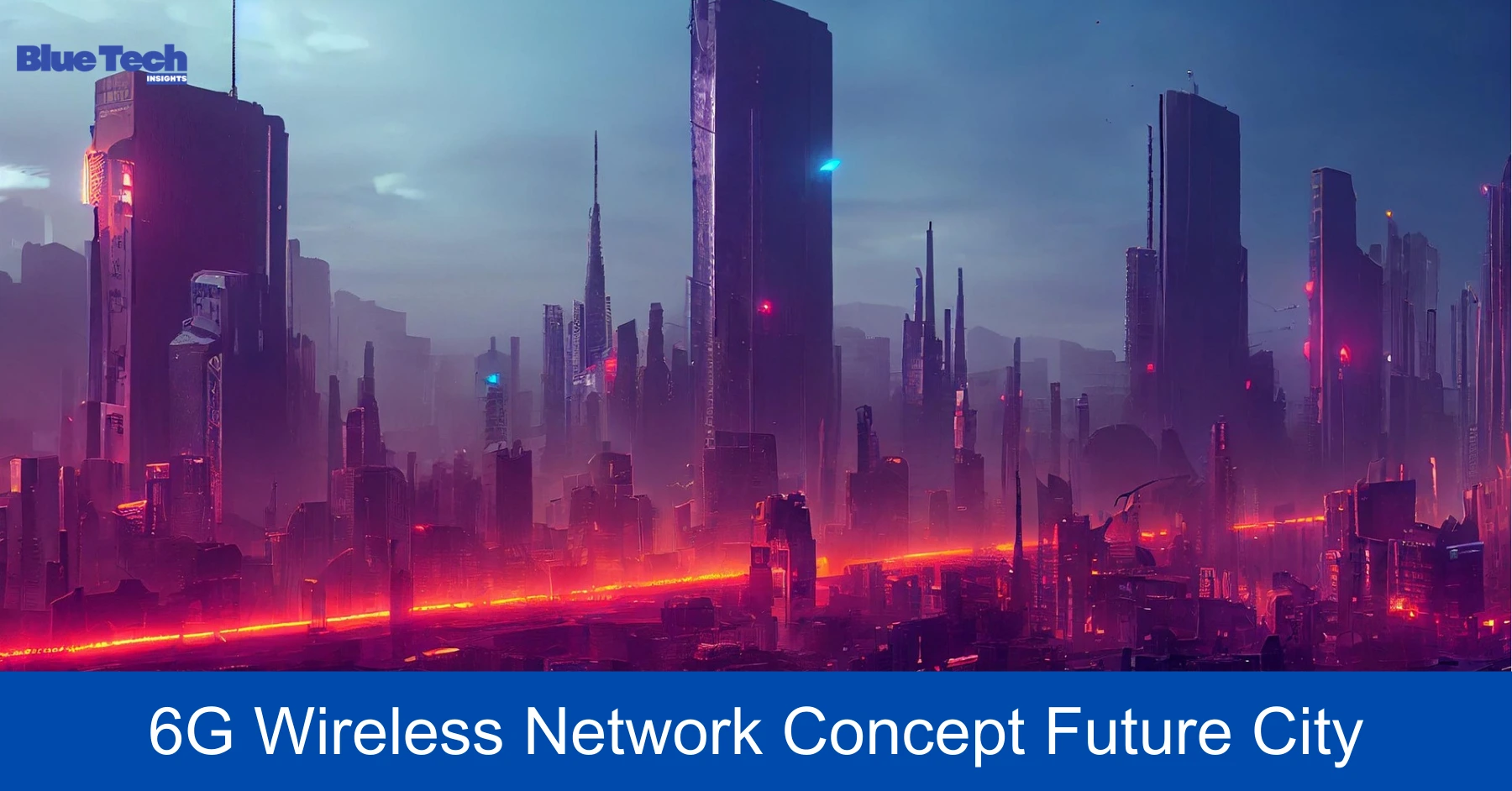
While the world is still mastering the capabilities of 5G, the telecommunications industry is already looking toward the next frontier: 6G (Sixth Generation). As of 2026, research and development have reached a fever pitch, with global standards starting to take shape. 6G is not merely a “faster 5G”; it represents a paradigm shift where the internet becomes invisible, ubiquitous, and deeply integrated into our physical reality.
In this comprehensive exploration, we will dive into the core technologies of 6G, how it compares to its predecessor, and the life-changing applications we can expect in the near future.
1. Defining 6G: The “Internet of Everything”
If 5G was about connecting people and things (IoT), 6G is about the “Internet of Everything” (IoE). In 2026, we are seeing the emergence of networks that are not just for communication but for “sensing” and “computing.” 6G will act as a global nervous system, connecting billions of sensors, devices, and human-machine interfaces with near-perfect reliability.
2. Unprecedented Speed: From Gigabits to Terabits
The most headline-grabbing feature of 6G is its raw speed. While 5G peaks at around 20 Gbps, 6G is projected to hit 1 Terabit per second (Tbps).
- 100x Faster: This is 50 to 100 times faster than 5G. Imagine downloading 100 high-definition movies in a single second.
- Terahertz (THz) Spectrum: To achieve these speeds, 6G will move beyond the gigahertz frequencies into the Terahertz (THz) range. This allows for massive bandwidth but requires new antenna technologies to overcome the short-range limitations of such high-frequency waves.

3. Microsecond Latency: The Key to Real-Time Interaction
In 2026, “lag” is becoming a thing of the past. 5G reduced latency to milliseconds, but 6G aims for microsecond latency(less than 1 millisecond).
- Why it matters: This near-instantaneous response is critical for “Mission Critical” applications.
- Remote Surgery: A surgeon in London can operate on a patient in Tokyo with zero delay, using haptic gloves that transmit the sense of touch over 6G.
- Autonomous Swarms: Self-driving cars will be able to communicate with each other and city infrastructure in microseconds, preventing accidents before they even happen.
4. AI-Native Networks: The Self-Thinking Web
In the 2026 tech landscape, 6G is being built from the ground up to be AI-Native. Unlike previous generations where AI was an “add-on,” 6G uses Artificial Intelligence to manage its own resources.
- Self-Optimization: The network can predict traffic spikes and redirect bandwidth automatically.
- Energy Efficiency: AI will put parts of the network to “sleep” when not in use, aiming for a 90% reduction in energy consumption compared to current 5G infrastructure.
5. 5G vs. 6G: Key Comparison (2026 Data)
| Feature | 5G Technology (Current) | 6G Technology (Expected) |
| Peak Speed | 20 Gbps | 1 Tbps |
| Latency | 1 – 5 Milliseconds | < 1 Microsecond |
| Connection Density | 1 Million devices / km2 | 10 Million devices / km2 |
| Key Spectrum | Sub-6 GHz & mmWave | Terahertz (THz) / Sub-THz |
| Reliability | 99.999% | 99.99999% |
| Primary Goal | High-speed Mobile Data | Fusing Digital & Physical Worlds |
Export to Sheets
6. Revolutionary Applications: Holograms and Digital Twins
By the time 6G begins its early rollouts (expected near 2028-2030), we will see applications that look like science fiction today.
A. High-Fidelity Holographic Communication
6G has the bandwidth to transmit life-sized, 3D holograms in real-time. Video calls will evolve into Holographic Telepresence, where a person appears to be standing in your living room, complete with depth and spatial audio.
B. Digital Twins of the Physical World
6G will enable the creation of “Digital Twins”—virtual replicas of cities, factories, and even human organs. These twins are updated in real-time via billions of 6G sensors, allowing us to test “what-if” scenarios in the virtual world before applying them to the real one.
C. The Haptic Internet
Beyond sight and sound, 6G will support Haptic Communication. This means we can transmit the sensation of touch, texture, and temperature over the internet. This will revolutionize online shopping, remote healthcare, and immersive gaming.
7. Global Connectivity: Bridging the Digital Divide
In 2026, the shift to 6G also includes Non-Terrestrial Networks (NTN). By integrating traditional cell towers with Low-Earth Orbit (LEO) satellites, 6G aims to provide high-speed coverage to the most remote corners of the Earth—oceans, deserts, and rural villages—ensuring that the benefits of the digital revolution are shared by all.
Conclusion: Preparing for a Hyper-Connected World
The shift to 6G is more than just a faster signal; it is the foundation for the next stage of human evolution. From holographic education to AI-managed smart cities, the possibilities are limitless. While the full commercial rollout is still a few years away, the technological breakthroughs of 2026 are setting the stage for a world where we are more connected, more efficient, and more creative than ever before.
Disclaimer: The information provided in this article is based on current industry leaks, rumors, and supply chain reports available as of 2026. While we strive for accuracy, the final specifications, features, and release dates are subject to change by the respective manufacturers (Apple, Samsung, Microsoft, etc.) upon official launch. This content is for informational purposes only and does not constitute professional advice.
About the Author