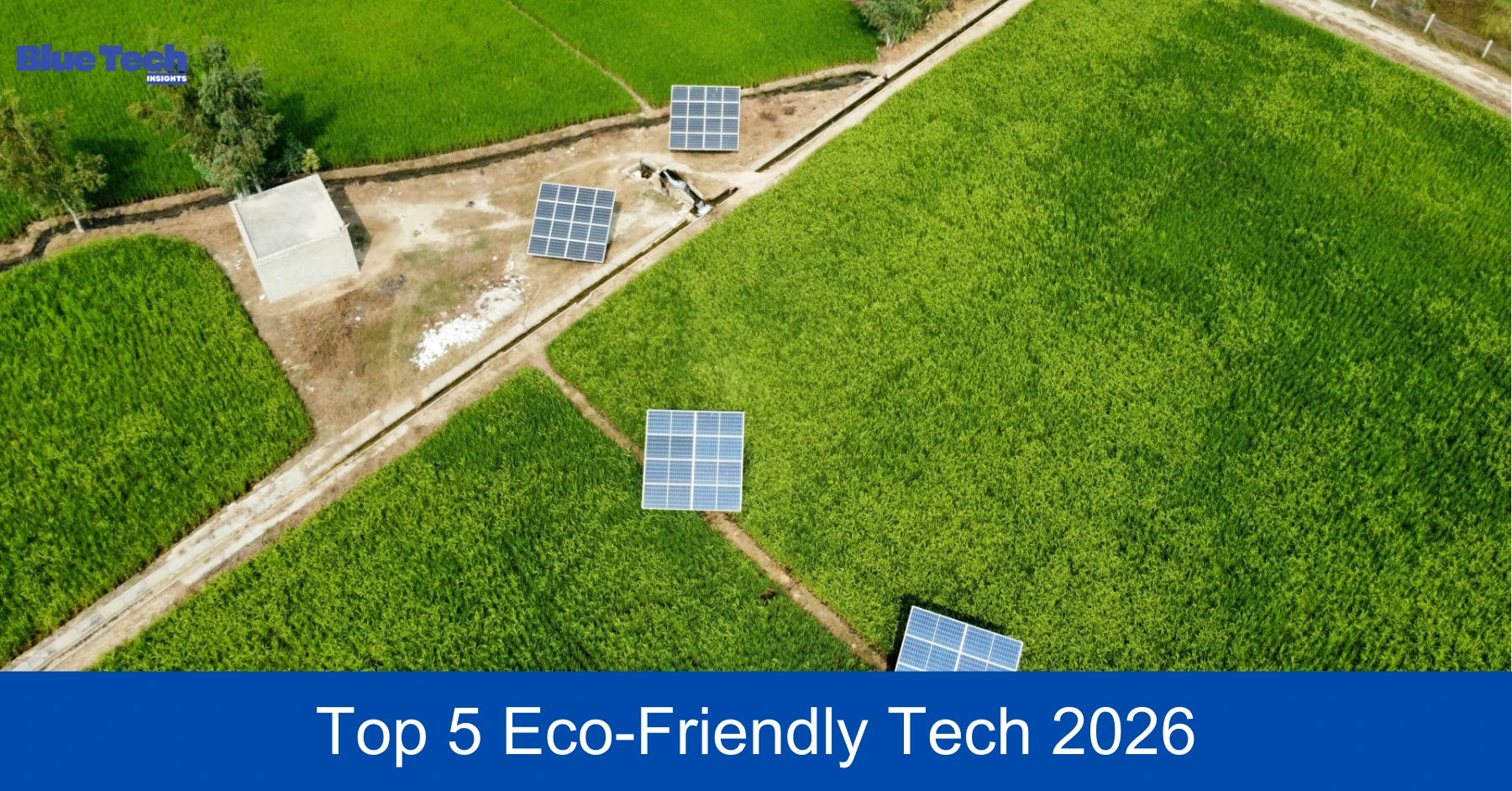
As climate change becomes an undeniable reality in 2026, the global tech market has shifted from “fast electronics” to Sustainable Technology. Consumers are no longer just looking for the fastest processor or the clearest screen; they are looking for devices that have a minimal carbon footprint.
From biodegradable smartphones to energy-harvesting home tools, eco-friendly innovation is leading the charge this year. Here are the top 5 sustainable tech gadgets that are dominating the market in 2026.
1. Solar-Powered Smart Charging Hubs
One of the most significant shifts in 2026 is the decline of traditional wall chargers. High-efficiency Solar-Powered Charging Hubs have become a household staple. Unlike older solar chargers, these 2026 models use next-gen perovskite solar cells, which can harvest energy even from indoor ambient light.
- Why it’s leading: They eliminate the need for phantom power draw from wall outlets and are made from 100% recycled ocean plastics.
- Top Pick: The Anker SolarGo 2026 Series provides enough power to charge a laptop and two smartphones simultaneously using only renewable energy.
2. Biodegradable Smartphones & Modular Accessories

In 2026, the “Right to Repair” movement has peaked. Companies are now releasing Modular Smartphones where every component—from the battery to the camera lens—is easily replaceable by the user.
- Eco-Impact: The outer shells of these phones are now made from biodegradable bioplastics (like flax or bamboo fiber). If you decide to upgrade, the casing can be composted instead of ending up in a landfill.
- Top Pick: The Fairphone 6 Eco-Edition remains the leader in this category, offering a 10-year software support guarantee to reduce electronic waste.
3. Solid-State Portable Freezers
Traditional cooling systems use refrigerants that are harmful to the ozone layer. In early 2026, Solid-State Cooling Technology (Elastocalorics) went mainstream. These portable freezers use zero chemical refrigerants and consume 40% less energy than traditional compressors.
- Why it’s leading: Perfect for eco-conscious travelers and off-grid living, these devices offer zero-emission cooling.
- Top Pick: The EcoChill Pro 2026 is a favorite for its silent operation and carbon-neutral manufacturing process.
4. AI-Powered Smart Water Managers
With water scarcity being a major concern in 2026, tech gadgets that conserve water are in high demand. AI-Powered Water Managers attach to your main water line and use machine learning to detect leaks as small as a single drop per minute.
- Eco-Impact: These devices can reduce household water waste by up to 30%. They also integrate with smart home systems to optimize garden irrigation based on real-time weather data.
- Top Pick: The Aper Irresense 2, which revolutionized smart irrigation this year by eliminating the need for underground pipes.
5. Kinetic Energy Wearables
Why charge your smartwatch when you can power it by moving? 2026 has seen a massive comeback for Kinetic Energy Harvesting. New wearable gadgets use “Triboelectric Nanogenerators” that convert your arm movements and even your body heat into electrical energy.
- Why it’s leading: It completely removes the need for lithium-ion battery replacements, which are difficult to recycle.
- Top Pick: The Garmin Enduro Eco-Motion, a smartwatch that can theoretically run forever as long as the user stays active.
Conclusion: The Green Revolution is Here
The sustainable tech gadgets of 2026 prove that we don’t have to sacrifice innovation to save the planet. By choosing modular designs, solar power, and kinetic energy, we are moving toward a future where technology and nature coexist. If you’re looking to upgrade your tech arsenal this year, these five gadgets represent the gold standard of eco-friendly living.
Disclaimer: The information provided in this article is based on current industry trends, eco-tech innovation reports, and sustainable market projections as of 2026. Product availability, specific features, and eco-certifications may vary depending on the manufacturer and region. This content is for informational purposes only and does not constitute financial or professional environmental advice.
About the Author