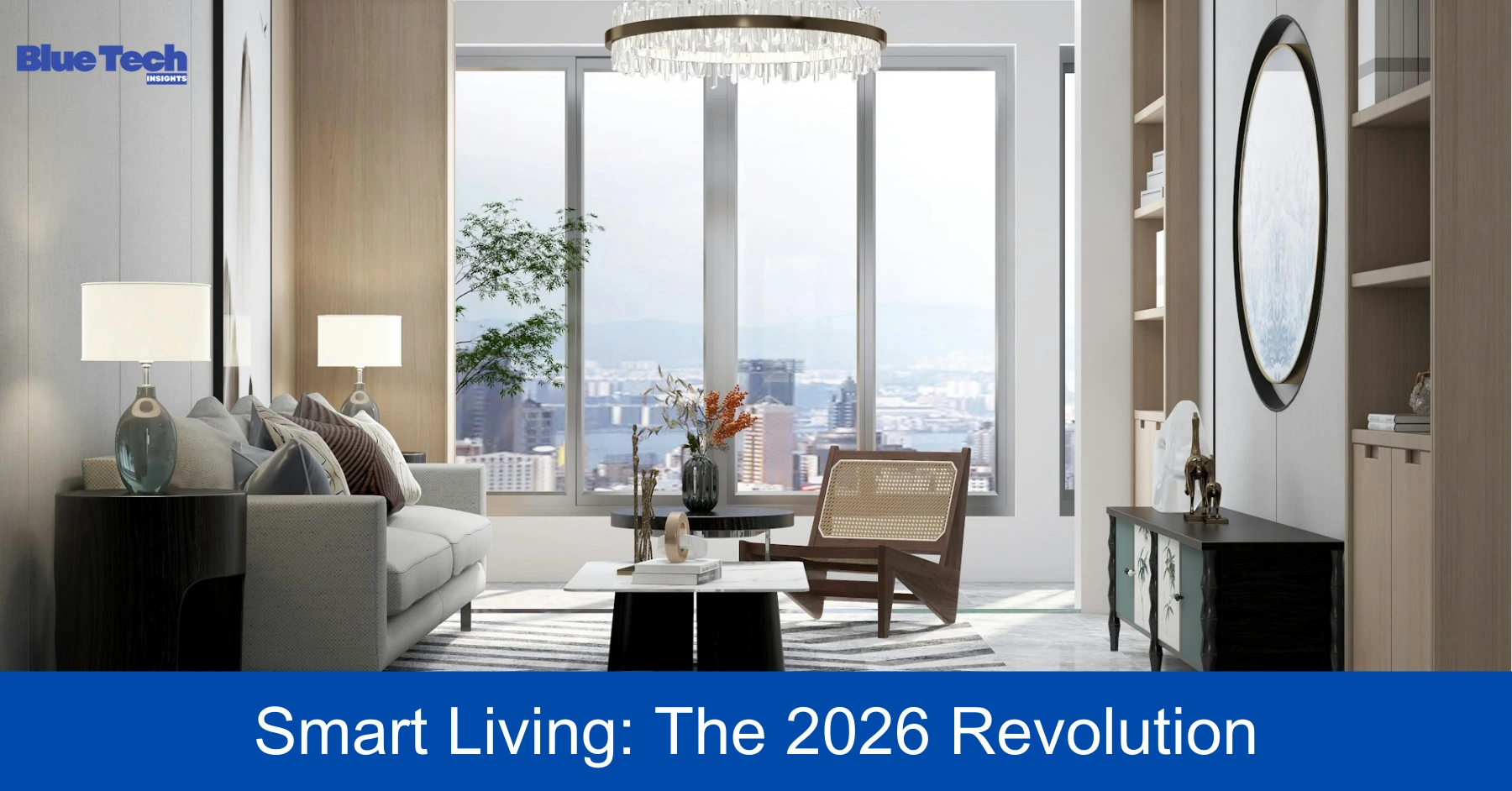
In 2026, the concept of a “Smart Home” has evolved from a collection of isolated gadgets into a cohesive, thinking ecosystem. We have moved past the era where a smart home just meant turning on lights with your voice. Today, our living spaces are becoming proactive partners in our daily lives—anticipating our needs, managing our health, and drastically reducing our environmental impact.
This shift is not just about luxury; it is about a fundamental change in how we experience modern living. Here is how smart home devices are transforming our homes in 2026.
1. From Reactive to Predictive AI
The biggest change this year is the transition from Reactive AI (doing what you ask) to Predictive AI (doing what you need before you ask). In 2026, smart home hubs like the latest Matter-enabled controllers analyze your daily patterns using machine learning.
- Contextual Awareness: Your home knows that if you wake up at 6:00 AM on a weekday, you need the coffee machine to start at 5:55 AM and the bathroom floor to be warmed.
- Self-Tuning Environments: Using “Presence Sensors,” your home adjusts lighting and temperature based on exactly which room you are in, ensuring that energy is never wasted on an empty space.
2. Circadian Lighting and Human-Centric Design

In 2026, we understand more than ever how indoor environments affect our biology. Circadian Lighting Systems have become a standard feature in modern homes. These systems automatically adjust the color temperature and brightness of your home’s lights to mimic the natural cycle of the sun.
- Morning: Bright, cool blue tones to boost cortisol and help you wake up naturally.
- Evening: Warm, amber tones to encourage melatonin production and improve sleep quality.
- Impact: Homeowners report significantly better sleep patterns and reduced eye strain, making “Human-Centric Design” a top priority for 2026 interior designers.
3. The Smart Kitchen: An Intelligent Culinary Assistant
The kitchen has seen the most dramatic technological upgrades this year. In 2026, appliances are no longer just tools; they are assistants.
- AI-Guided Cooking: Smart ovens now feature internal cameras and weight sensors that identify the food you put inside. They automatically deploy the ideal cooking time and temperature, ensuring perfect results every time.
- Inventory Management: Smart refrigerators track expiration dates in real-time and suggest recipes based on the ingredients you already have, effectively reducing food waste—a major trend in 2026 sustainability.
4. Energy Independence and Smart Grids
With energy costs fluctuating globally, 2026 smart homes are focused on Energy Independence. Home automation systems are now deeply integrated with solar panels and smart battery storage.
- Smart Grid Participation: Your home can now communicate with the local power grid, automatically selling excess solar power during peak demand and purchasing energy when prices are lowest.
- Predictive Maintenance: AI-driven systems can now detect if a dishwasher or HVAC unit is consuming more power than usual, alerting you to potential mechanical issues weeks before a total breakdown occurs.
5. Next-Generation Security: Biometrics and Privacy
Home security in 2026 has moved beyond simple cameras. Touchless Biometric Access and AI-driven threat detection are the new standards.
- Facial & Gait Recognition: Smart locks can now recognize family members not just by their faces, but by the way they walk (gait recognition), providing a seamless, hands-free entry experience.
- Privacy-First Processing: A major trend this year is Edge Computing. Most smart home data is now processed locally on the device rather than in the cloud, ensuring that your private life stays private.
6. Comparison: Traditional Home vs. 2026 Smart Home
| Feature | Traditional Home (Pre-2025) | Smart Home (2026) |
| Automation Type | Manual/Scheduled | Predictive & Habit-Based |
| Lighting | Static (On/Off) | Circadian (Biology-Sync) |
| Security | Key-based/Basic Cameras | Biometric/AI-Threat Detection |
| Energy Management | Manual Control | AI-Grid Integration & Self-Storage |
| Appliances | Standalone Tools | Integrated Assistants |
Conclusion: Living in the Future
The smart home of 2026 is no longer a gimmick; it is a vital tool for a healthier, more efficient, and more secure lifestyle. By integrating AI into the very fabric of our houses, we have created environments that don’t just house us—they take care of us. As technology continues to advance, our homes will only become more intuitive, proving that the future of living is truly smart.
Disclaimer: The information provided in this article is based on current smart home technology trends, market reports, and AI development projections as of early 2026. Actual features, device compatibility (e.g., Matter/Thread protocols), and availability may vary based on specific brands, software versions, and regional regulations. This content is for informational purposes only and does not constitute professional home engineering or security advice.
About the Author